Hydration Sensors Track Performance Fluctuations in Multi-Stage Triathlon Competitions
Written by Yara Lange · Nov 25, 2026
Hydration Sensors Track Performance Fluctuations in Multi-Stage Triathlon Competitions
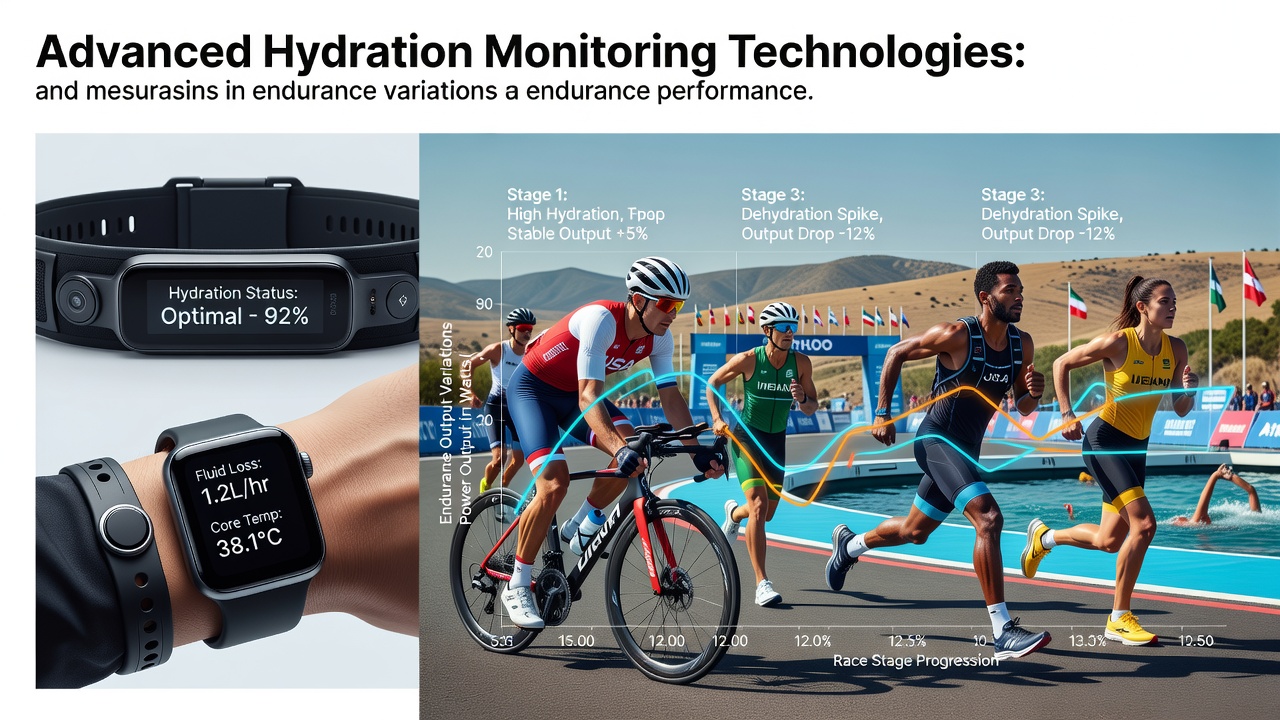
Triathletes competing in multi-stage international events rely on hydration monitoring tools to manage fluid balance across swim, bike, and run segments that unfold over consecutive days, and researchers have documented how these devices connect to measurable shifts in endurance output such as sustained power, pace maintenance, and recovery between stages. Data from events like the World Triathlon Series and Ironman 70.3 multi-day formats show that athletes equipped with sweat analysis sensors and smart intake systems adjust electrolyte replacement in real time, which correlates with steadier heart rate zones and reduced performance drops in later stages.
Tools and Measurement Methods
Wearable patches and armband devices calculate sweat rate alongside sodium concentration while athletes move through varying temperatures and humidity levels common at venues in Australia, Europe, and North America, and these readings feed into algorithms that recommend precise fluid volumes per hour. Studies conducted by the Australian Institute of Sport indicate that triathletes who integrate this feedback maintain higher average wattage outputs on bike legs and preserve running economy when cumulative fatigue sets in after the second or third day of competition.
Portable urine specific gravity meters and connected apps further allow teams to log overnight rehydration status before each stage starts, and observers note that consistent use of these combined tools reduces instances of early-stage dehydration markers that previously led to measurable declines in stride length and cadence during run portions. Equipment manufacturers have refined sensor accuracy through field tests at events held in 2025, setting the stage for broader adoption ahead of scheduled multi-stage races in November 2026 across Asia-Pacific circuits.
Performance Data Patterns
Analysis of race telemetry from international multi-stage triathlons reveals that athletes who calibrate intake based on hydration sensor alerts experience smaller variations in overall endurance metrics compared to those relying on generalized plans, and figures from team performance databases show average improvements of 3 to 5 percent in stage-to-stage consistency when sodium loss exceeds 800 milligrams per liter. This linkage appears strongest in hot and humid conditions where evaporative cooling demands rise sharply, forcing rapid adjustments that sensors capture more reliably than subjective thirst cues alone.
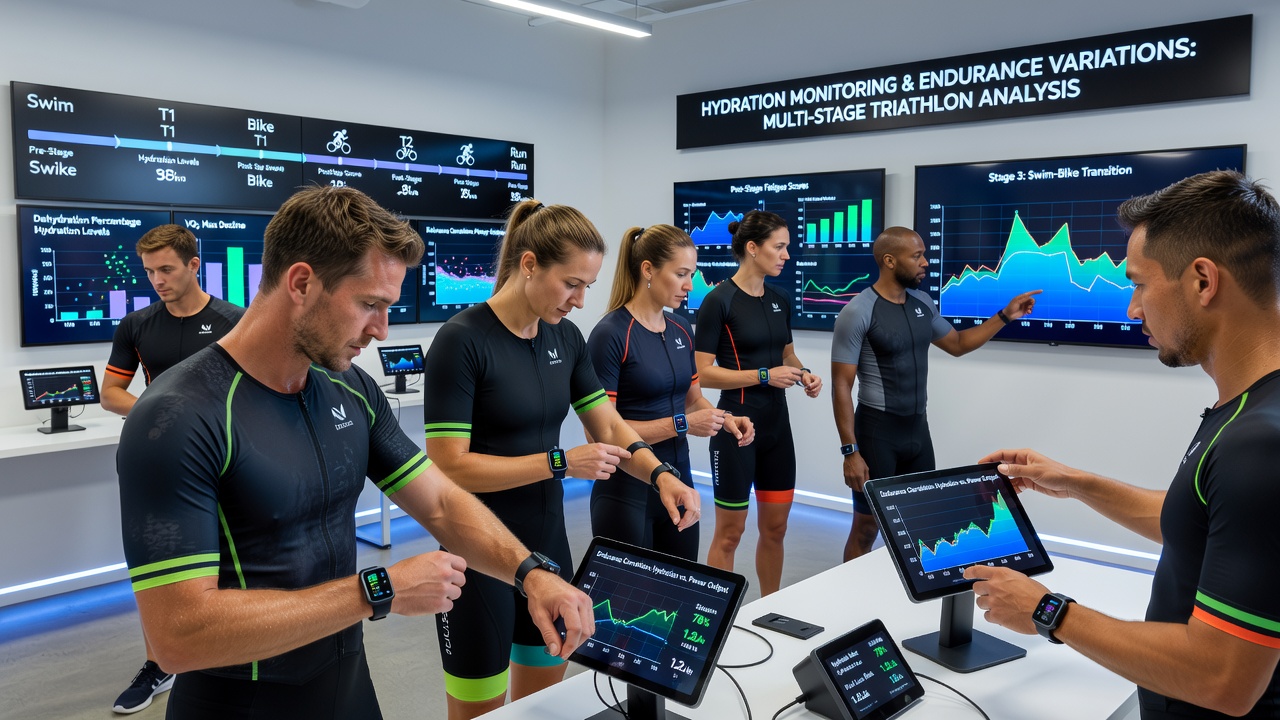
Coaches working with national federations report that integrating these monitoring systems into daily training logs helps identify individual sweat profiles early, and athletes then carry those personalized thresholds into competition where multi-day demands amplify small hydration errors into larger output gaps by the final stage. European College of Sport Science publications document similar patterns across cohorts tracked during 2024 and 2025 events, noting that real-time alerts correlate with fewer mid-stage slowdowns in power-to-weight ratios.
Event-Specific Applications
Multi-stage formats such as the Challenge Roth series and ITU World Cup multi-day clusters present unique variables including altitude shifts, water temperature changes, and compressed recovery windows, and hydration tools help athletes navigate these by providing stage-specific recommendations that account for cumulative losses. Data collected at the 2025 Pan American Games multi-stage triathlon demonstrated that competitors using linked monitoring platforms sustained higher overall rankings when fluid strategies adapted hourly rather than following fixed schedules set days in advance.
November 2026 events in Oceania are expected to feature expanded sensor integration as governing bodies finalize protocols for data sharing between medical staff and coaches, and preliminary reports suggest this will allow finer tracking of endurance output trends across mixed-gender fields. Those who have reviewed telemetry from prior years note that the strongest associations between hydration accuracy and performance stability emerge when athletes combine sensor data with environmental forecasts for each stage.
Conclusion
Evidence compiled from international triathlon competitions continues to highlight connections between hydration monitoring tools and endurance output stability, with sensor-derived adjustments helping athletes manage the demands of consecutive stages more effectively. Ongoing refinements in device precision and data integration point toward wider application in upcoming events, where objective fluid tracking may further clarify how individual physiological responses influence final rankings.