Shifting Weather Patterns Transform Forecasting Accuracy and Statistical Trends Across Outdoor Athletic Events
Written by Sam Walter · Oct 28, 2026
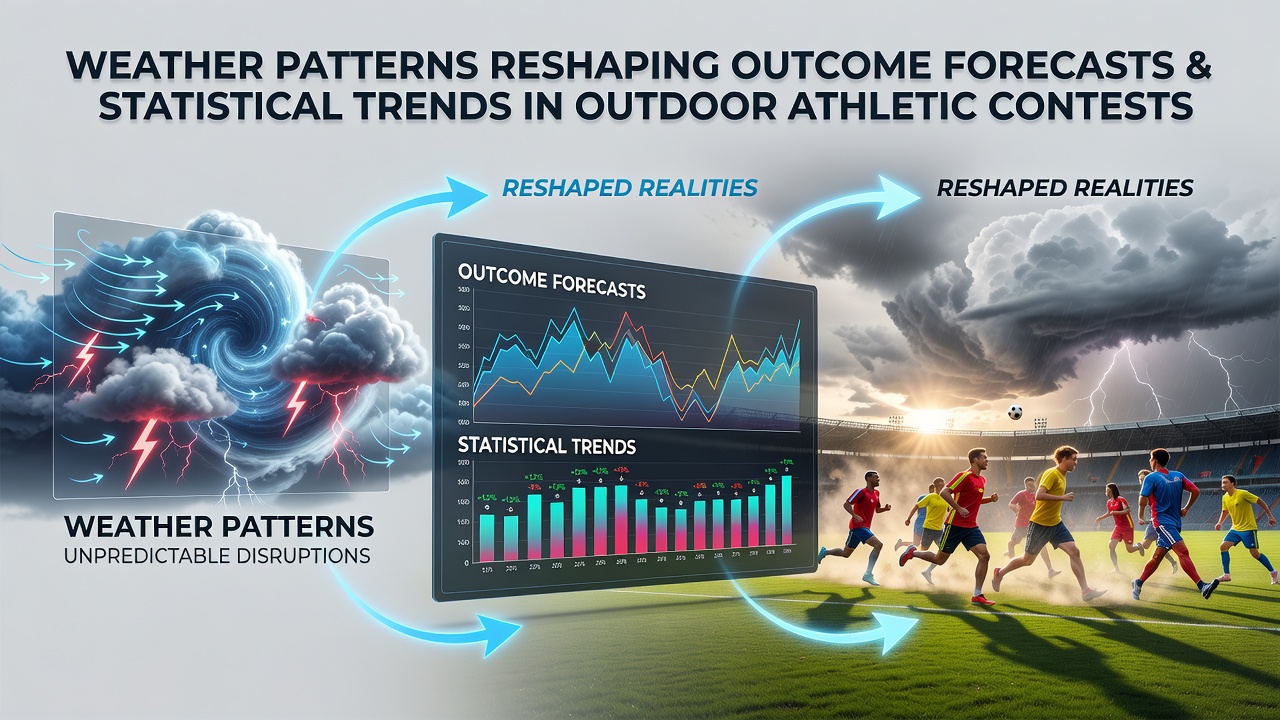
Shifting Weather Patterns Transform Forecasting Accuracy and Statistical Trends Across Outdoor Athletic Events
Weather systems across continents have shown measurable shifts in temperature ranges, precipitation frequency, and wind patterns over recent decades, and these changes directly influence how analysts project results in events such as marathons, cycling tours, tennis tournaments, and soccer matches played outdoors. Data collected by meteorological agencies indicate that average global temperatures have risen steadily since the mid-twentieth century, while regional storm intensities have increased in both duration and variability.
Observed Changes in Climate Metrics and Their Direct Effects on Competition Variables
Records maintained by the National Oceanic and Atmospheric Administration document a rise in the number of days exceeding historical temperature thresholds during summer competition windows, and these elevated readings correlate with documented declines in endurance performance times for distance runners and cyclists. Wind speed anomalies recorded over the North Atlantic have also altered typical tailwind patterns that previously favored certain race routes in European road events.
Precipitation totals in traditionally arid training regions of Australia and the southwestern United States have fluctuated more sharply year to year, forcing event organizers to adjust start times and course layouts to maintain safety standards. Statistical models used by performance analysts now incorporate updated humidity and heat-index variables because older formulas no longer match observed finish-line data from major races held between 2020 and 2025.
Adjustments in Predictive Models for Specific Outdoor Disciplines
Forecasting teams responsible for tennis grand slams have revised their rain-delay algorithms after extended wet periods disrupted multiple editions of tournaments in both the northern and southern hemispheres. These revisions include real-time radar integration that reduces the margin of error in match-duration estimates, which in turn affects scheduling for broadcast partners and player recovery planning. Researchers tracking European soccer leagues report that higher rainfall amounts during autumn fixtures have increased the frequency of low-scoring games, prompting statisticians to recalibrate goal-expectancy formulas that feed into pre-match projections.

Cycling race organizers have incorporated elevation-adjusted temperature forecasts into power-output simulations because sustained heat during mountain stages has been shown to elevate core body temperatures faster than previously modeled, leading to earlier fatigue in pelotons. One study released by the European Environment Agency examined five major tours and found that average stage times lengthened by measurable percentages on days when wet-bulb globe temperatures exceeded established thresholds.
Regional Data Sets and Emerging Statistical Patterns Through 2026
Analysts examining North American baseball and Canadian football outdoor games note that increased thunderstorm activity during late-season windows has shortened playable innings and altered yardage totals in ways that older seasonal averages cannot capture. Projections prepared for events scheduled in October 2026 already factor in higher probabilities of heat advisories across southern venues and early-season snow risks at northern sites, adjustments that were less prominent in models from a decade earlier.
Longitudinal data sets compiled by university research groups in multiple countries reveal that wind-direction variability has widened the spread of finishing times in open-water swimming competitions and sailing regattas, prompting statisticians to expand confidence intervals around expected outcomes. These expanded ranges appear in official performance databases used by national governing bodies and international federations alike.
Integration of New Variables Into Existing Trend Analyses
Performance tracking platforms now routinely merge satellite-derived soil-moisture readings with historical injury logs because firmer or softer playing surfaces directly influence movement patterns in field hockey, rugby, and track-and-field events. Meteorologists working with sports data firms supply updated seasonal outlooks that replace static climate normals with rolling thirty-year averages, thereby improving the alignment between projected conditions and actual competition results.
Case examples from recent seasons illustrate how sudden temperature drops during evening sessions have compressed scoring margins in basketball games played in open-air arenas, while prolonged dry spells have accelerated ball speeds on grass courts used for professional tennis. Observers note that statistical services have begun publishing weather-adjusted leaderboards that normalize raw results against recorded environmental conditions on the day of competition.
Conclusion
Agencies responsible for maintaining sports archives continue to update their methodologies to account for evolving weather inputs, and governing bodies increasingly require environmental data disclosure alongside traditional performance metrics. These combined adjustments produce forecasts that more closely reflect the conditions athletes encounter, while statistical repositories reflect narrower gaps between predicted and realized outcomes across a growing range of outdoor disciplines.