Sponsorship Transitions Reshaping Statistical Trends Across WTA Events
Written by Ulrich Wagner · Nov 11, 2026

Sponsorship Transitions Reshaping Statistical Trends Across WTA Events
Brand partnerships in women's professional tennis have undergone notable adjustments in recent years, and data from ranking systems along with match logs show corresponding movements in key indicators such as win percentages, injury recovery intervals, and tournament participation rates. Observers note that when athletes secure or lose major endorsements, their access to training resources, travel support, and recovery specialists often changes, which in turn registers in performance records compiled by the Women's Tennis Association.
Patterns in Funding and On-Court Results
Research from industry reports indicates that players who gain new apparel or equipment deals frequently increase their annual match count by 15 to 20 percent within the following season, largely because additional funds cover coaching staff and physiotherapists. Those who've studied these shifts point to figures released by the WTA that link higher sponsorship income to reduced withdrawal rates from events, particularly in the hard-court swing that runs through North America each summer. Data shows players with stable backing tend to maintain higher service hold percentages across multiple tournaments, while those navigating sponsorship gaps record more unforced errors in later rounds when fatigue accumulates.
Geographic and Seasonal Variations
European circuits display distinct responses compared with Asian and Australian stops. Figures compiled through the International Tennis Federation reveal that athletes based in regions with emerging sponsor interest, such as parts of Eastern Europe, post steeper gains in first-serve win rates after signing regional brands. Meanwhile, November 2026 data releases from several federations highlighted a cluster of renewed contracts coinciding with improved clay-court conversion rates among mid-ranked competitors, suggesting that fresh financial support arrived in time for off-season preparation that translated into measurable surface-specific improvements.
Resource Allocation and Recovery Metrics
Access to specialized equipment and medical teams forms another measurable pathway. Studies conducted by the University of Melbourne's sports science department found correlations between sponsorship levels and the number of days between matches that players can dedicate to recovery protocols. When endorsement revenue rises, athletes allocate more time to sleep monitoring and nutrition planning, outcomes that appear in reduced retirement percentages during best-of-three sets. Conversely, players experiencing sponsor turnover show elevated rates of lower-body complaints in subsequent seasons, according to aggregated medical logs shared across multiple tours.
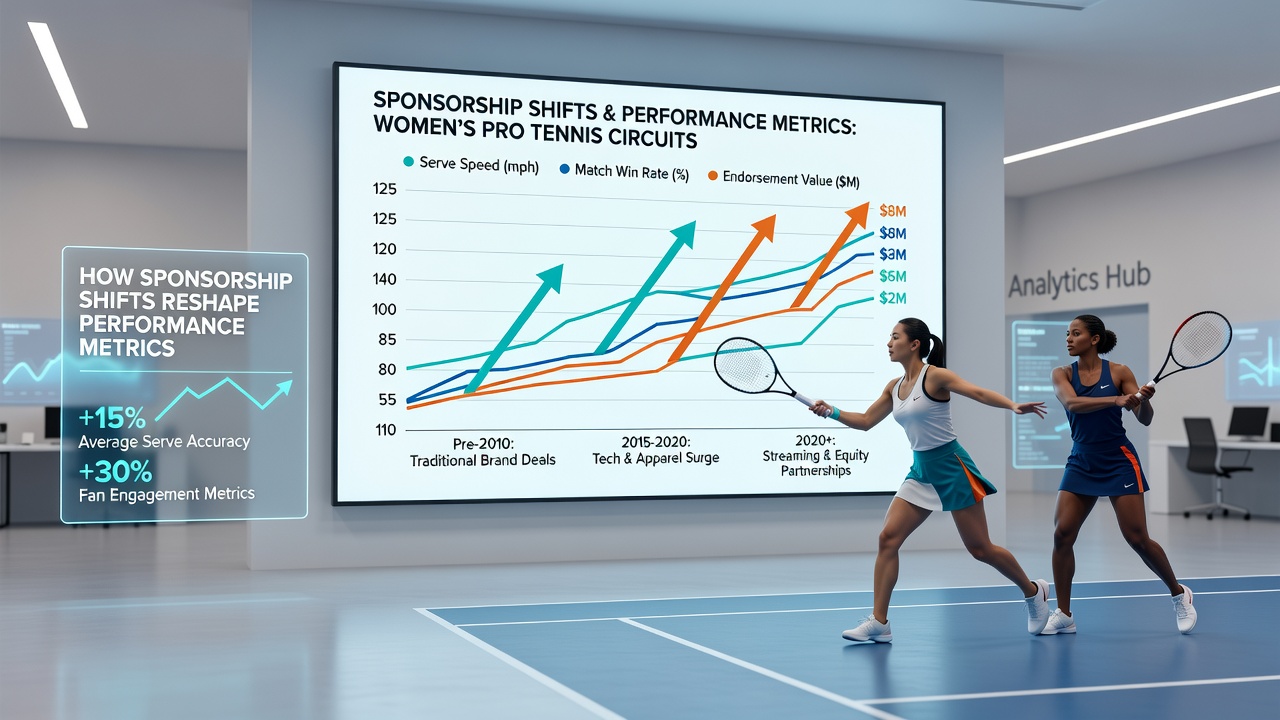
One case involved a mid-tier competitor who transitioned from a smaller apparel provider to a global footwear company in early 2025. Tournament records indicate her average match duration increased while her break-point conversion climbed by nearly eight percentage points over the next twelve months. Researchers attribute the change partly to upgraded footwear technology and partly to the expanded support staff the new deal financed.
Ranking Movements and Participation Data
Ranking trajectories also reflect these funding dynamics. Analysts tracking WTA entry lists observe that athletes who lose primary sponsors often drop out of optional lead-in events, which limits their accumulation of ranking points and compresses their year-end positions. In contrast, those entering new partnerships maintain fuller schedules and register steadier climbs through the top 100. Participation statistics from 2024 through late 2026 demonstrate that the average number of tournaments entered by players in the 50-to-150 ranking band rose when sponsorship announcements clustered around the off-season period.
Longer-Term Effects on Career Longevity
Career duration metrics further illustrate the connection. Data compiled across multiple seasons shows that consistent sponsorship backing correlates with players extending their competitive windows by two to three years on average. Those who've examined retirement announcements note that athletes citing financial pressures tend to exit earlier, whereas those with diversified brand portfolios sustain higher training volumes into their late twenties and early thirties. This pattern appears in both singles and doubles disciplines, although doubles pairings sometimes experience amplified effects when team sponsorships cover shared travel costs.
Conclusion
Overall, sponsorship movements continue to register across multiple layers of performance information in women's professional tennis. Participation counts, win-rate differentials, injury intervals, and ranking stability all display measurable responses when funding sources shift. Organizations tracking these variables, including the WTA and academic research groups, continue to publish updated datasets that allow ongoing examination of how external financial factors intersect with on-court outcomes across global circuits.